When comparing aluminum vs. fiberglass pop-up truck campers for business buyers, start with the finished unit your customer will receive. The body material is one part of that decision. The interior, selected equipment, documented weight, and service arrangements also need to suit the dealership, fleet, brand, or project behind the order.
At Huntoo Camper, HT-A01 and HT-A02 are aluminum pop-up models, while HT-F01 is a fiberglass pop-up model. A useful purchasing comparison explains what each proposed configuration includes and which requirements it meets. It should leave your team able to choose a model for a stated reason.
Establish what the body material description covers
Ask which parts of the camper the material description identifies: exterior panels, framing, roof, or another assembly. Then request the construction information available for that model. An aluminum body label alone leaves the buyer without details about its joints, openings, finish, and internal arrangement.
Fiberglass is a composite material. In general materials terminology, glass fibers provide reinforcement within a polymer matrix, as described in Composites UK’s introduction to fiber-reinforced composites. The resin, reinforcement, and construction details still need to be identified for a particular product. That general definition does not establish HT-F01’s laminate, core, manufacturing method, or performance.
Keep those product details separate from the general material description. Ask for clarification of an unfamiliar construction term before using it in a customer specification or dealer listing.
Compare the Huntoo pop-up models within the same scope
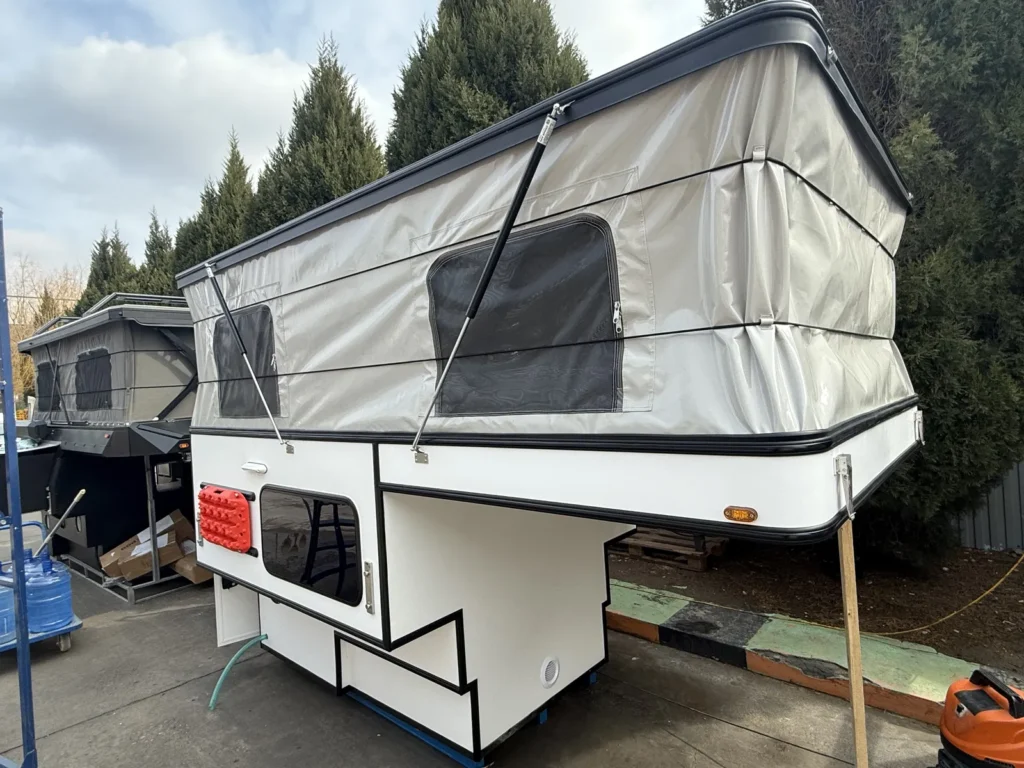
The HT-A01 aluminum pop-up camper is one starting point for an aluminum-body inquiry. The HT-A02 aluminum pop-up model has a sloped exterior profile. Assess that profile against the proposed vehicle and interior requirements using the model’s confirmed drawings and dimensions.
The HT-F01 fiberglass pop-up camper provides the fiberglass candidate for this comparison.
Select comparable interior and equipment requirements before drawing conclusions. If one proposal includes additional equipment, ask for that difference to be shown clearly. Demonstration photographs may include Optional equipment, so use the confirmed list for the proposed order.
Use complete-unit evidence for weight and vehicle planning
A buyer needs the weight of the specified camper and a clear explanation of what that figure includes. Request the measurement basis, equipment version, and treatment of loose supplied items. Comparing an empty body figure with a furnished configuration would answer the wrong purchasing question.
When your team changes the equipment list, ask whether the weight information needs updating. Keep the final figure connected to the same configuration used in the order. Vehicle suitability and installation then require review for the actual truck and intended loading.
Leave any claim that one material produces a lighter camper open until comparable complete-unit data is available. This keeps the decision tied to the products being considered.
Review the interior before choosing the body
For a furnished camper, the body choice should support the interior your buyers need. Use the Huntoo interior views to identify layouts worth discussing, then confirm the arrangement available for each candidate model.
A rental fleet can test where its supplied dining kit and guest bags would go. A dealer can check whether the customer can understand the dining and sleeping arrangements during a handover. A project buyer may need accessible storage for a particular equipment set.
Ask about the dimensions of the relevant spaces, access to installed equipment, and the cleaning guidance for the selected finishes. Record any layout difference that affects the buying decision. A familiar body material cannot compensate for a storage opening that will not accept the intended kit.
Build a comparison sheet around purchase decisions
| Decision | Evidence for the aluminum candidate | Evidence for the fiberglass candidate |
|---|---|---|
| Body construction | Identify which assemblies are aluminum and request the relevant construction description. | Identify the fiberglass assemblies and request available construction details. |
| Finished configuration | List the selected interior, included equipment, and Optional items. | Use the same requirements and identify model-specific differences. |
| Weight comparison | Obtain complete-unit data tied to the selected equipment. | Obtain data on a comparable basis before ranking the two. |
| Appearance | Review the proposed finish and agree acceptable visual condition. | Review the proposed surface finish using equivalent viewing conditions. |
| Service planning | Clarify how the supplied construction and finish would be assessed if damaged. | Clarify the assessment route for the supplied composite construction and finish. |
| Climate-related claims | Request assembly details and evidence supporting any specific claim. | Apply the same evidence requirement to the fiberglass model. |
Give each open item an owner and a next action. Where evidence remains unavailable, keep the affected comparison unresolved. Avoid filling that gap with a general reputation for the material.
Discuss service preparation with your local team
Before selecting a body, ask the service provider who would assess damage in your market what information they need. Give them the proposed construction and finish details. Confirm their willingness and ability to work on that product rather than assuming a general metalwork or composite repair background is sufficient.
With the supplier, clarify how a concern would be reviewed, what identification or photographs would be needed, and whether relevant parts or finish information can be supplied. Record the agreed scope. These are project questions, not a promise of a particular repair method, response time, or warranty.
Apply the same approach to thermal, moisture, and weather-related claims. Request evidence for the complete proposed assembly and the stated conditions. Material names and exterior photographs do not establish a whole-camper performance rating.
Choose against the requirement that matters to the order
For a dealer, the deciding factor might be the confirmed layout its customers want and the information its local service partner can use. A rental fleet may prioritize a clear handover and a workable reset routine. A brand or project buyer may need a particular combination of interior space, documented configuration, and service responsibilities.
Write the selection reason in the purchasing record: the chosen model, the requirement it satisfies, the evidence reviewed, and any open conditions. This gives the next person a basis for checking a revised proposal.
Huntoo Camper has its own factory in China, with a focus on finished interiors and direct factory communication. Send Huntoo your candidate models and purchasing priorities to discuss the configuration information needed for an aluminum-versus-fiberglass comparison.