
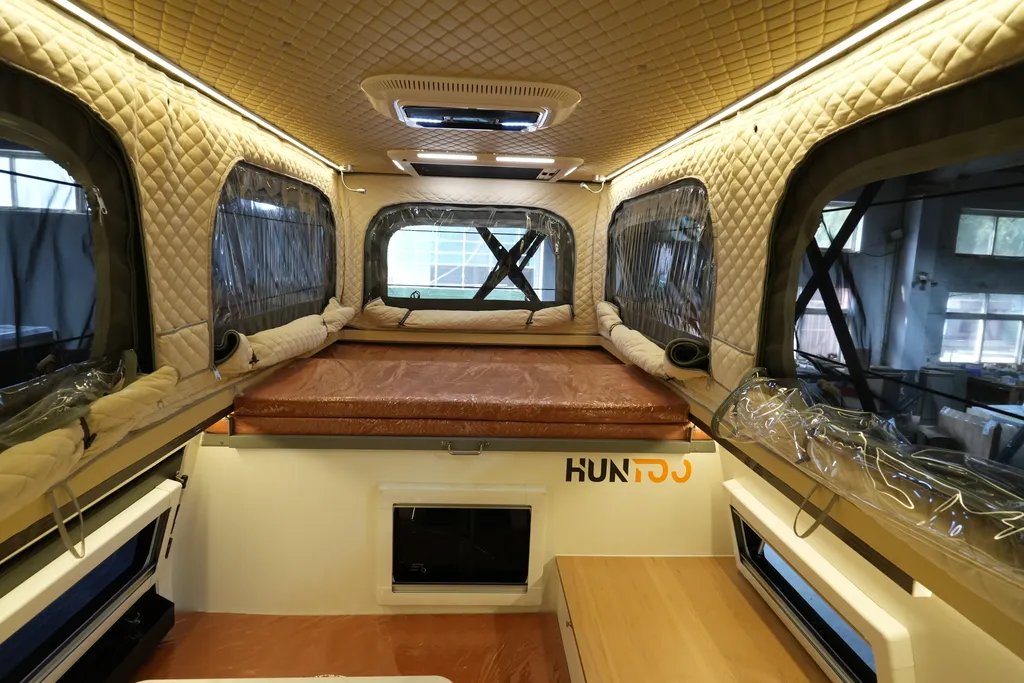
A finished interior can look complete in an overall photograph while leaving purchasing questions unresolved. Does the visible equipment match the agreed list? Can the cabinets open in the intended arrangement? Which observations have been corrected, and which still need a decision? Importers need answers tied to the actual unit before agreeing to the next order milestone.
A furnished truck camper interior inspection checklist for importers should connect three things: the approved configuration, visible and functional observations, and a clear record of what happens next. The checklist below is a buyer’s acceptance framework to agree with the supplier, rather than a description of Huntoo’s standard inspection procedure.
Set the reference before reviewing the interior
Collect the order’s model reference, latest equipment list, interior drawings or approved layout images, and written changes. Put a revision date on the inspection sheet. If two documents disagree, clarify which version controls that item before recording a result.
Identify the unit being inspected with the supplier’s available unit or order reference. For a batch, keep a separate observation record for each unit. A photograph of one demonstration camper does not establish the condition or configuration of the entire shipment.
The Huntoo interior gallery can help explain the areas under discussion, but the order-specific agreement should define what the buyer expects to receive. Treat equipment seen only in a photograph as a question until its inclusion is confirmed.
Use a room-by-room route
Choose one inspection route and keep the photograph sequence consistent: entrance, main storage, dining area, kitchen, sleeping area, and any additional spaces included in the configuration. This makes a remote review easier to follow and helps reviewers identify a missing view.
Take an overall image of each area before moving closer. Detail photographs should show the item in context as well as the observation itself. For a door alignment concern, for example, include the full cabinet and a closer view of the affected edge.
Record the condition observed in plain language. “Lower drawer contacts adjacent door when opened” is more useful than “cabinet bad.” Avoid assigning a cause from an image if the cause has not been established.
Separate appearance, operation, and technical verification
| Review area | Buyer observation | Evidence to request |
|---|---|---|
| Visible finishes | Compare surfaces, edges, and visible damage with agreed acceptance criteria. | Overall and close photographs under usable lighting. |
| Cabinets and drawers | Observe opening, closing, latch engagement, and interference. | A continuous demonstration of the relevant movement. |
| Dining and sleeping arrangement | Check the agreed layout and any included conversion components. | Images of each agreed use position and the component list. |
| Installed equipment | Match visible identification and inclusion to the approved list. | Readable labels where accessible and the agreed test record. |
| Loose supplied items | Compare quantities and identity with the packing list. | A numbered inventory and photographs before packing. |
Do not treat a short operating video as an electrical, gas, structural, or other technical certification. Agree which tests are required, who is qualified to perform them, what conditions apply, and which records will be supplied. The acceptance sheet should identify those records without asking an unqualified reviewer to perform hazardous tests.
Inspect the selected configuration in use
Ask for cabinets and drawers to be demonstrated in the normal interior arrangement. Note interference with the table, cushions, adjacent doors, or other installed items. If an area is inaccessible in a sleeping arrangement, record that behavior as part of the layout review.
Confirm the identity and quantity of cushions, table parts, covers, and other loose components included in the order. Where the interior has a conversion function, request a demonstration of the agreed sequence and identify where detached parts belong.
For equipment, compare the installed item with the approved equipment list rather than relying on a familiar-looking panel. Record unreadable or inaccessible identification as an open item. Request clarification through the supplier instead of assuming equivalent specifications.
Create an observation list with a decision for each item
Give every observation a unique number. Add the unit reference, location, description, evidence filename, requested response, responsible party, and status. Use simple statuses such as “open,” “awaiting clarification,” “correction submitted,” and “accepted by buyer.”
Define acceptance criteria before using pass or fail labels. A cosmetic observation may need comparison with an agreed sample, while a missing item can be checked directly against the equipment list. Avoid creating dimensional tolerances or surface standards after the inspection has started.
When a correction is submitted, request evidence that shows the same location and the corrected behavior. Retain the original observation so the purchasing team can follow the decision. If the buyer accepts an exception, record that specific exception instead of marking an entire unit accepted by implication.
Plan the inspection milestone with production
Discuss the review point early enough for both sides to understand the time required for inspection, buyer response, and any agreed corrections. Huntoo’s stated production time is 60–70 working days. Confirm how the order’s review and release milestones fit within the current project schedule.
Production time does not define ocean transit, destination handling, or final delivery. Use the production and delivery information as a starting point for the schedule conversation and obtain order-specific confirmation from sales.
For a first order, decide whether a buyer representative, an independent inspector, a remote review, or a combination is appropriate. Agree scope and access beforehand. An interior review covers the items assigned to it; it should not be presented as full import clearance or complete vehicle approval.
Close the review with a traceable handoff
The final packet should include the configuration reference, unit records, observation list, correction evidence, agreed exceptions, and the buyer’s written milestone decision. Keep shipping release instructions separate and explicit in the order communication.
Direct communication with Huntoo’s factory in China can help keep questions connected to the project. Ask which records can be prepared for your order and agree the required evidence before inspection begins.
Preparing an importer acceptance checklist? Send Huntoo your proposed inspection scope and camper configuration to discuss the review points and documentation your purchasing team needs.