
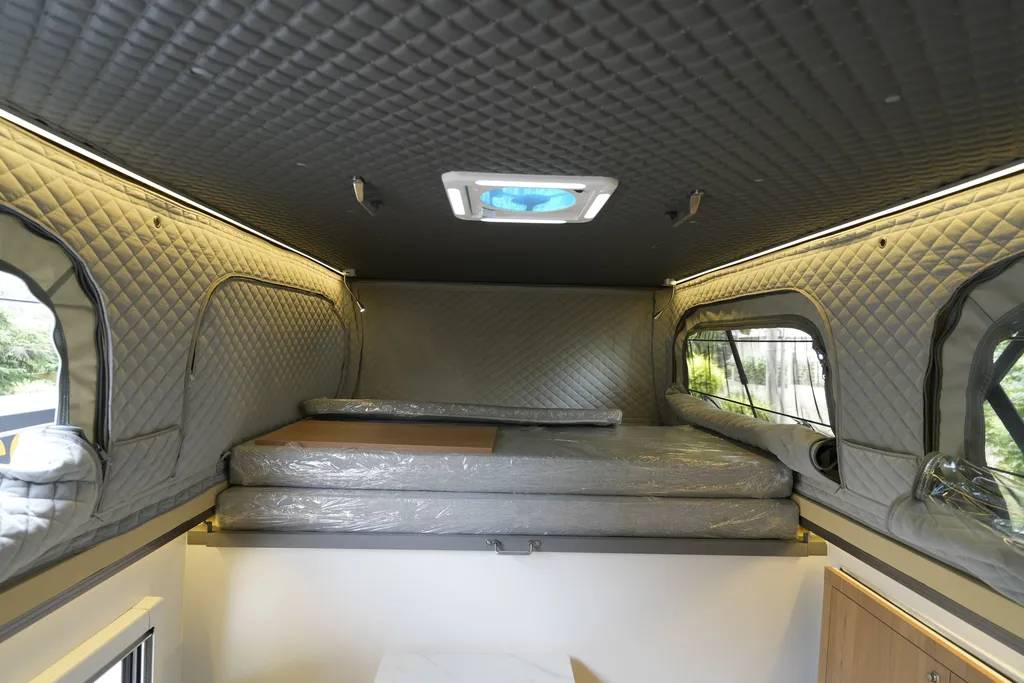
A family weekend can fill a small camper quickly, especially when bedding, food, clothing, and outdoor gear arrive in separate bags. The useful question is where each item belongs during arrival, meals, bedtime, and departure. A packing plan should make those changes manageable without turning the doorway or dining area into temporary storage.
This furnished truck camper packing plan for a family weekend is also a useful handover exercise for dealers and rental operators. Test it with the selected interior and the actual family group. Dining and sleeping arrangements, equipment availability, and storage limits need to match the camper being supplied.
Write the weekend before writing the packing list
Begin with the number of travelers, nights away, planned meals, and expected activities. Confirm the approved sleeping arrangements for that group before deciding what bedding to bring. The packing exercise does not establish that a particular camper has sleeping space for every family size.
Make a short timeline: arrival on Friday, the first meal, bedtime, Saturday activities, and departure. Note which items appear at each stage. This often reveals duplicate supplies and equipment that will occupy space without being used.
Review the Huntoo furnished camper interiors to discuss suitable spaces, then confirm the usable compartments and dimensions of the chosen configuration. Website photographs show demonstration vehicles and may include Optional equipment.
Allocate space before choosing bags and bins
Name a location for clothing, bedding, food, dining supplies, outdoor items, and the things needed immediately on arrival. Check opening dimensions as well as internal space. A rigid bin that fits a compartment on paper may be difficult to insert or remove in the normal interior arrangement.
Choose containers that suit the verified storage area and its intended use. Soft bags can be convenient for clothing, while a compact organizer may help keep a supplied dining kit together. Neither choice establishes that the contents are adequately secured for travel; follow the camper’s storage and restraint instructions.
Ask the supplier about compartment load limits and the appropriate location for heavier items. Do not treat empty floor space, a table surface, or an upper cupboard as an acceptable travel location merely because an object can be placed there.
Use the order of access to organize the weekend
| Trip stage | Items to group | Access question |
|---|---|---|
| Arrival | First-use clothing, towels, and the next meal’s supplies | Can these be reached before personal bags are unpacked? |
| Meals | A small dining kit and food grouped by planned meal | Can the kit be retrieved without clearing the entire dinette? |
| Bedtime | The confirmed bedding set and overnight essentials | Where do daytime items go during the sleeping arrangement? |
| Outdoor return | A designated bag for used clothing and separate clean items | Can damp or dirty items be kept apart from clean bedding? |
| Departure | All loose items and removable components | Can every item return to its approved travel location? |
Keep the plan realistic for the chosen interior. A smaller number of well-defined locations is easier to explain at handover than a complicated system that changes every time a guest opens a cupboard.
Keep the first evening simple
Pack the first meal as a group instead of distributing its ingredients across every food compartment. Keep the intended dining supplies together. A rental operator can photograph that arrangement so guests understand where the supplied items belong.
Choose the meal plan around the equipment confirmed for the camper. Do not assume a demonstration photograph establishes that a refrigerator, cooking appliance, or other item is included. Follow the applicable food-storage and equipment instructions for the trip.
Lay out the clothing needed on arrival without unpacking every traveler’s bag. For a short stay, one identified clothing location per person may be easier to manage than several shared bags with unclear contents.
Rehearse bedtime while still at home or at handover
Use the intended bedding and put the interior into its confirmed sleeping arrangement. If the layout involves a conversion, follow the supplied sequence. Identify any compartments that become harder to reach and move overnight essentials to an appropriate accessible location beforehand.
Then reverse the process. Decide where the bedding waits while the daytime arrangement is restored. If the only answer is to block the entrance, reduce the packed volume or ask whether another suitable storage location exists.
For rental teams, this rehearsal can become a brief handover demonstration. Ask guests to explain the sequence back and show where their own bags will go. A photograph of the finished arrangement is more useful when accompanied by that practical explanation.
Check the packed travel arrangement
Before departure, return all loose items to their approved locations and check closures as directed by the camper instructions. Keep exits, controls, required ventilation openings, and service access clear. A tidy appearance alone does not show that the load is suitable for travel.
For Australian buyers, the National Transport Commission’s light-vehicle load guidance explains the importance of restraining loads and observing mass limits. Its light-vehicle guide covers vehicles within its stated scope up to 4.5 tonnes gross vehicle mass. Australian source guidance checked October 16, 2026; buyers elsewhere should use their applicable vehicle instructions and local guidance.
Confirm the complete vehicle’s carrying limits and loading requirements through the appropriate vehicle and camper documentation. A packing list should include the trip’s carried items when that assessment is made.
Use the return trip to improve the handover
After the weekend, note what was used, what stayed packed, and what repeatedly blocked another task. Remove unnecessary duplicates from the next list. Keep changes connected to the same interior so a useful packing plan is not accidentally applied to a different model.
Dealers and fleet buyers can use that feedback when comparing the Huntoo camper range. Ask which proposed configuration best supports the intended routine, then confirm the details of its storage and equipment before ordering.
Planning campers for family bookings or customer handovers? Share your traveler profile and storage priorities with Huntoo to discuss the interior information needed for your project.